What First-Time Campground Buyers Need to Know Before They Start Looking
Buying a campground is one of the most exciting—and life-changing—investments you can make.
Posted: November 21, 2025
It’s a lifestyle business, a real estate asset, and an opportunity to build something meaningful. But for first-time buyers, the process can feel overwhelming if you don’t know what to expect.
Whether you’re dreaming of owning a small RV park, a large resort-style property, or a seasonal campground, this guide will walk you through the basics every new buyer should understand before they start looking.
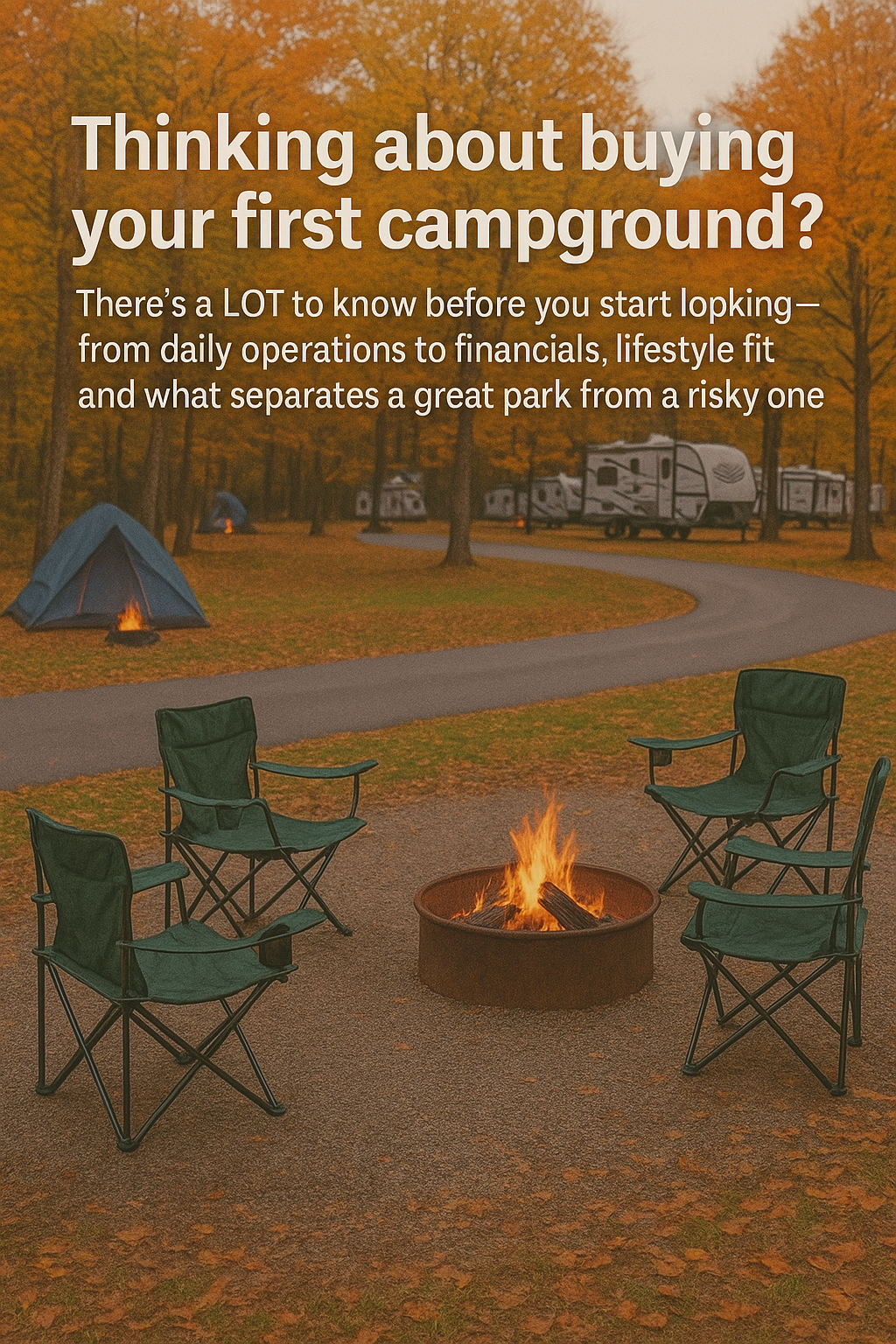
1. Campground Ownership Is a Lifestyle First, Business Second
Yes, a campground can provide solid income. Yes, it’s real estate. But more than anything, it’s a lifestyle decision.
You may be a good fit for campground ownership if you:
- Enjoy working with people
- Don’t mind being outdoors
- Like solving small problems
- Want a hands-on, community-centered business
- Prefer a “live where you work” environment
If you’re looking for something 100% passive, campground ownership may not be the right fit—unless you buy a large enough park to hire a full management team.
2. Understand the Different Income Streams
A campground isn’t just nightly RV sites. Most parks generate income from a mix of:
- RV sites (nightly, weekly, monthly, and seasonal)
- Tent sites
- Cabins, tiny homes, and glamping units
- Store sales
- Laundry
- Firewood, ice, and other retail
- Storage and parking
- Activities and events
- Boat rentals or recreation (if applicable)
The stronger the variety of revenue streams, the healthier and more stable the operation tends to be.
3. Seasonal vs. Year-Round Operations
Where the park is located makes a big impact on revenue, workload, and operations.
Seasonal Parks (e.g., Midwest, Northeast):
- Busy May–October
- Winters are used for maintenance, planning, and slower off-season work
- Great for buyers who want “time off” each year
- Often rely heavily on seasonal guests and return customers
Year-Round Parks (e.g., South, Southwest):
- Income all 12 months
- Higher staffing needs
- More consistent cash flow
- Popular with snowbirds
Knowing which lifestyle fits you saves you from chasing the wrong kind of property.
4. The Financials: What to Look At
Before you fall in love with a property, make sure you understand how to read the financial picture.
You should review:
- Profit & Loss statements
- Utility costs
- Payroll
- Occupancy history
- Seasonal vs nightly revenue
- Loan obligations (if a seller is carrying financing)
- Capital expenses (upcoming repairs)
For first-time buyers, it’s helpful to work with someone who can explain campground-specific financials—because they look very different from traditional real estate or commercial businesses.
5. Know Your Budget Before You Start Shopping
Here’s a quick rule of thumb for first-time buyers:
- Lenders typically require 20–30% down
- Strong credit and reserve cash are important
- Most banks prefer parks with solid financial records
- Seller financing can be an option, but buyers should still be well-qualified
Understanding your real buying power helps narrow the search and reduces frustration.
6. Not All Campgrounds Are “Fixer Uppers” Worth Taking On
New buyers often believe they can turn around a failing park with minimal investment. Sometimes that’s true—but often, distressed parks require:
- Major infrastructure repairs
- Septic, electrical, or water upgrades
- Rebuilding occupancy
- Rebranding and stronger marketing
- Heavy personal time commitment
If it’s your first park, choose something stable and manageable before tackling a “project.”
7. Location Matters More Than You Think
The best parks aren’t always the biggest—they’re the ones positioned near:
- High-traffic highways
- Attractions
- Lakes, rivers, and trails
- Or strong seasonal markets
Look at trends like tourism growth, local recreation, new commercial development, and population patterns. A great location supports year-round inquiries and easier resale in the future.
8. Make Sure You Understand the Daily Operations
Daily life as a campground owner may include:
- Checking in guests
- Fixing small issues
- Managing staff
- Housekeeping (cabins + bathhouses)
- Landscaping
- Operating the store
- Handling reservations
- Marketing and social media
- Seasonal prep and winterizing
Many first-time buyers thrive once they understand the operational flow—and many even enjoy the hands-on engagement.
9. Visit Parks Before You Buy One
Nothing replaces physically walking a property. You’ll quickly discover:
- What you like
- What you don’t
- What feels manageable
- What resonates with your goals
Touring parks (even ones you don’t intend to buy) is one of the best ways to learn the business.
10. Ask Questions—Lots of Them
Good questions include:
- Why is the seller leaving?
- What upgrades are needed soon?
- How many repeat customers do you have?
- How competitive is the local market?
- What software runs your reservations?
- What does your staffing look like?
- What is your biggest challenge?
You’re not just buying land—you’re buying a running business.
Final Thoughts
Buying a campground is an exciting journey filled with opportunity, income potential, and a rewarding lifestyle. The more you understand upfront, the more confident you’ll feel when the right park comes along.
At The Campground Connection, we’re here to help new buyers learn the industry, understand the lifestyle, and find the park that fits their needs—whether that’s this year or years down the road.
If you ever want guidance or have questions about any listing, just reach out.
We’re here when you’re ready.